
Finding Boston Residents Through Records
No single master list covers Boston residents. Narrow records do the work instead. Start from something checkable. A full Boston street address, a name with a middle initial, a former neighborhood, or an approximate year each opens a path. Address-first, use Boston Property Lookup. A name-first route might turn to a Boston court docket, a business filing, a professional-license result, or an individual voter-status check when the required identity details are known. Treat each match as a lead until a second record agrees.
Ownership, tax mailing information, and a recorded transfer are not a list of everyone at a Boston address. A Boston residents directory search works best when it separates those questions. History needs different records. A directory year, newspaper notice, probate file, or cemetery record adds the date and family connection that a current parcel screen cannot. Keep the threads apart.
- Enter a known Boston address or parcel ID in Property Lookup and record the situs, parcel ID, owner display, and mailing address.
- Use the parcel details to search Suffolk Registry of Deeds records for the latest transfer and its prior-reference trail.
- For a named person, compare a court, voter-status, license, or corporate result with an independent date or address detail.
- For an earlier household, check the Boston Public Library directory and obituary collections before assuming a modern portal reaches that era.
- When the record is not online, contact the named custodian, then use a focused Massachusetts Public Records Law request where that law applies.
Note: Court files, protected election data, and recent vital records follow separate access rules even when a related record is public. The Boston residents directory points to open sources only.
Boston Records Offices for Residents
Boston is the city being searched and the Suffolk County seat at once. A resident trail can move between Boston City Hall, county offices, the Massachusetts Trial Court, and state repositories. Boston Assessing supplies the parcel starting point. The Registry of Deeds preserves the recorded land chain. Local election records sit with the Boston Election Department. The Secretary of the Commonwealth hosts the limited individual status form. Every office keeps a different record, access channel, and privacy boundary.
Suffolk Registry of Deeds
24 New Chardon Street
Boston, MA 02114
617-788-6221
Boston Election Department
Room 241, City Hall
Boston, MA
617-635-8683
Registry research hours are weekdays, 8:30 a.m. to 4:30 p.m. Recording closes at 4:15 p.m. The online index is useful. Certified copies come from the Registry office. A full address chain is developed on the Boston street directory page.
Boston Property Lookup by Address
Boston Property Lookup is the practical first screen when an address is known. Its one search field accepts a Boston situs address or a 10-digit parcel ID. Owner names cannot be searched here. A result can show current owner names, a tax mailing address, assessed value, property type, parcel ID, net tax, exemptions, and links to map or permit material. Record the exact street form the City shows. Use that spelling before moving to other sources.
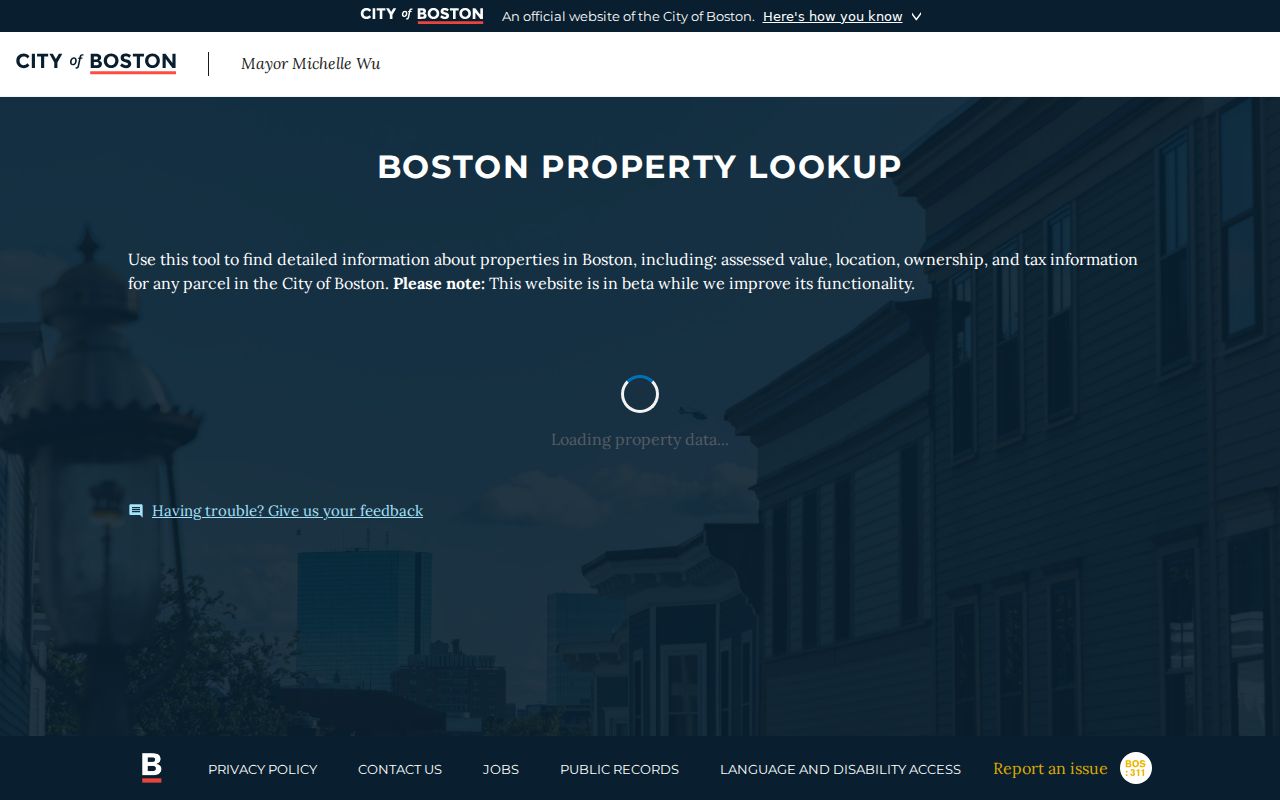
The form shows its address-or-parcel limit plainly. That is why a name-only Boston residents directory search should not begin by forcing an owner name into it.
| Property Lookup field | Use in a Boston resident search |
|---|---|
| Enter address or parcel ID | Start with a Boston situs address or the 10-digit parcel identifier. |
| Overview | Read owner display, owner mailing address, value, type, parcel ID, tax, and exemptions. |
| Property Value | Check value and history data where the City provides it. |
| Attributes | Review assessment characteristics for the parcel. |
| Permits | Follow associated permit information when a building-history date is useful. |
The situs is the Boston property location. The mailing address is where tax correspondence goes. Neither is a roster of people at the Boston parcel, and an ownership change may not appear immediately in the public display.
Boston Deed Index Time Depth
The Suffolk County Registry of Deeds search connects an address trail to recorded transfers, mortgages, and liens. It also covers plans and easements. The Recorded Land name index is indexed and imaged from 1973. It begins at Book 8595. Material from 1970 through 1972 is being verified and re-indexed. Try book, page, or Unindexed Property Search for older images. Image coverage reaches Book 194 from 1800. The Massachusetts Archives holds the oldest Suffolk deed volumes and indexes for 1629 through 1800.
Pull the current Boston deed first. Collect the grantor, grantee, and recording date. Add the book and page or document number, legal description, and referenced plan. Then search the seller as an earlier buyer. Older Boston instruments often use lots and bounds rather than a modern number. An address miss is not a dead end. Switch to the legal description before concluding the property has no history.
- Parcel
- A tax and mapping unit identified by the City, often the link between an address and a deed trail.
- Index
- A finding tool that points to a record. It is not always the complete original document.
- Grantor and grantee
- The party transferring an interest and the party receiving it in a recorded instrument.
- Criss-cross directory
- An address-organized directory that can point from a past street location to a listed occupant.
Note: Free online deed images support records research in Boston, while a certified copy of any deed is obtained through the Registry office.
Current Boston Residents Directory Sources
A current Boston residents directory is assembled from purpose-specific sources. A parcel record shows an assessed owner. It is not a list of everyone at the location. A deed names parties to a transfer. The voter form lets an individual check their own status. But it is not a browseable resident roll. Courts, licenses, and business filings confirm a dated affiliation. So use the record that answers the exact question and compare it with another official source.
| Boston source | What it can establish | Custodian | Access route |
|---|---|---|---|
| Boston Property Lookup | Boston owner display, mailing address, parcel, value, tax, exemptions | Boston Assessing | Free address or parcel search |
| Boston recorded land index | Boston transfer parties, date, document reference, legal description | Suffolk Registry of Deeds | Free online research and office follow-up |
| Boston voter-status form | Boston individual registration-status information | Secretary of the Commonwealth | Name, birth date, ZIP, and agreement required |
| Boston court docket | Boston party, case number, events, and disposition where public | Massachusetts Trial Court | MassCourts lead, clerk file for the official record |
| Boston license or corporate filing | Boston public license status or filed officer/director information | Commonwealth agencies | Free agency search interfaces |
Boston neighborhood liaisons and community organizations can point you to a meeting, archive, or association. No public membership directory should be assumed. When a current Boston match needs verification, compare dates and names rather than treating a single display as conclusive.
Boston Voter Status by ZIP
Massachusetts runs an individual lookup called Find my voter registration status, and it is built for one person at a time. It is not a public Boston residents directory. You cannot browse streets or households through it. The form asks for a first and last name, date of birth, a five-digit residential ZIP code, and a checked agreement box. The Commonwealth offers practical tips too. Use your registered name rather than a nickname, try a former ZIP after moving, and give a new registration two or three weeks before calling local election officials.
There is a reason the form resists browsing. Central voter-registry names and addresses are restricted under M.G.L. c. 51 §47C. Ballot choices stay private as well, so no street list or household roster comes out of this lookup.
Boston Court Dockets as Leads
MassCourts can hand you a party name, case number, court department, dated events, and a disposition. That applies when the matter is public. Pass the reCAPTCHA first. Then choose public-record search. The interface supports Name, Case Type, Case Number, and Ticket/Citation Number modes. Name mode carries limits for civil cases. Exact case-number format matters a great deal, including capitalization, spaces, and leading zeros. Expect duplicates too, because each party in a case gets its own row.
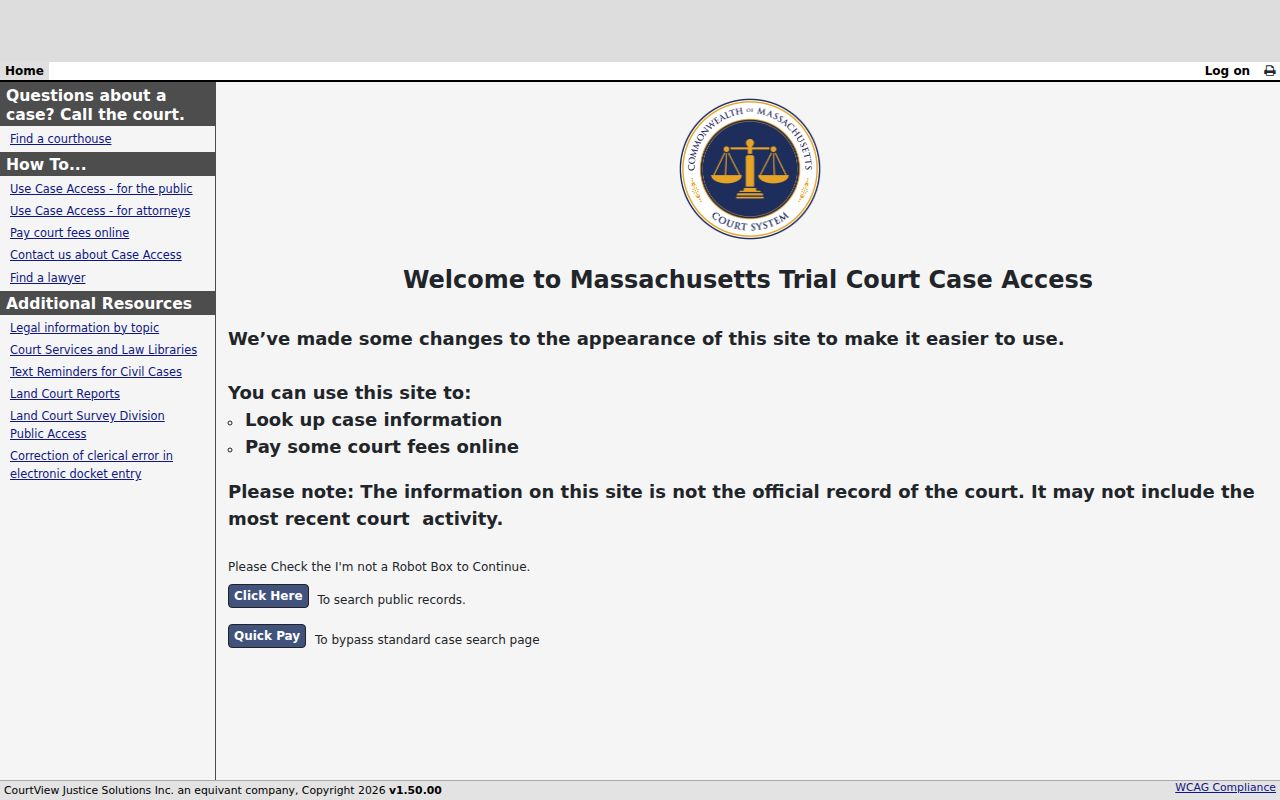
Treat any public result as a lead, not the official paper file. The clerk, register, or recorder at the Boston filing location holds the authoritative version. A courthouse kiosk can also surface information the home internet path does not show.
Boston Records Request Fallbacks
When an online Boston residents directory search dead-ends, go back to the keeper of the record. The keeper is Boston City Archives. It maintains both a catalog and a digital repository. Its public collections do have a shelving-related access limitation through spring 2027, though. The Boston Public Library also helps. It routes local-history questions to directories, obituaries, maps, telephone microfilm, tax books, and newspapers. For current municipal material, ask the relevant City department directly. It may offer a counter, phone, mail, or document-room route.
Massachusetts Public Records Law request guidance recommends putting requests in writing. It also suggests naming the records, date range, preferred format, and delivery method. M.G.L. c. 66 §10 generally requires a written response within 10 business days. The first four hours of staff time are generally free. Staff time beyond that is generally capped at $25 per hour. Standard black-and-white copies are generally capped at $0.05 per page. Court records are the exception, following court rules and clerk procedures instead.
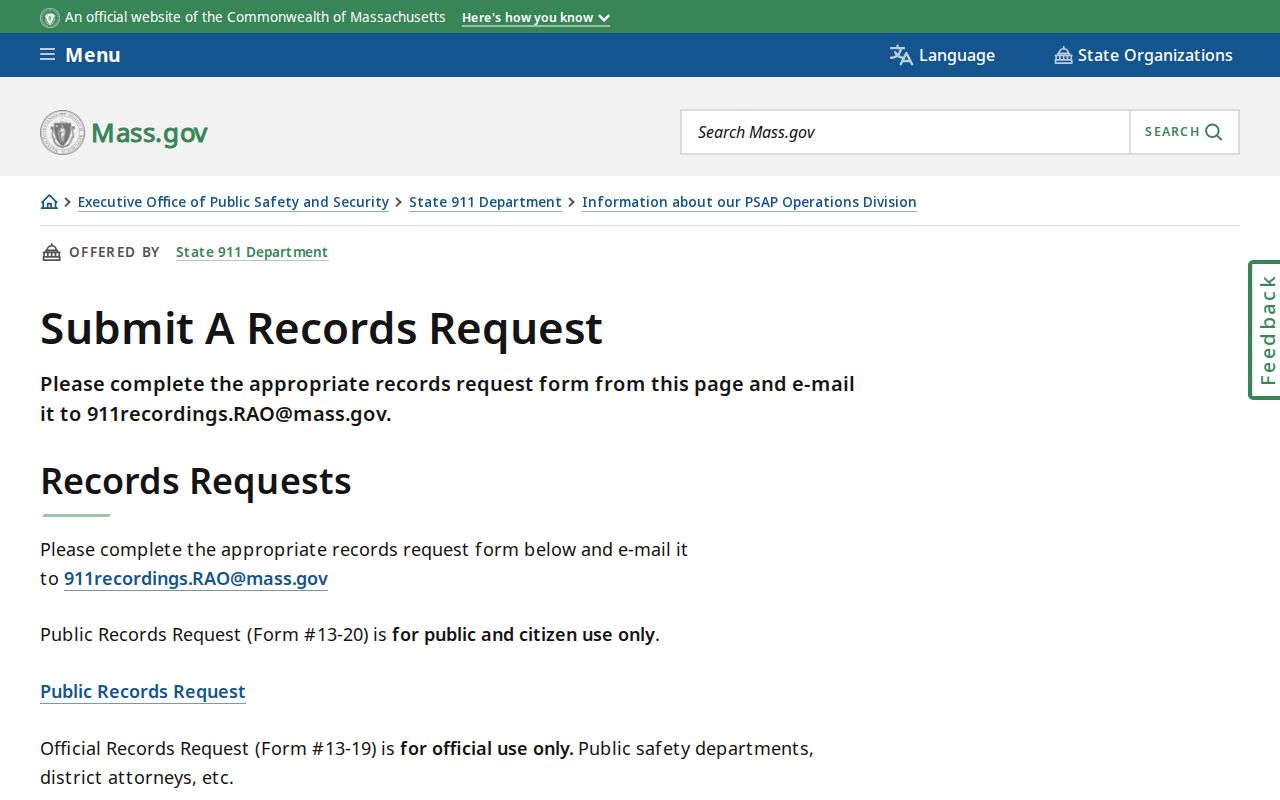
The state guidance rewards precision. A named series, a tight date range, and a clear format beat a broad request for information about a person every time.
Boston Vital Record Access
For a Boston birth, death, or marriage event, ask the custodian who actually holds the record. Don't count on an open name index. The Boston Registry Division issues Boston certificates and marriage licenses. The Registry of Vital Records and Statistics handles statewide certified copies from 1936 forward. Boston accepts online, mail, and counter orders. Its certified coverage starts in 1870. Earlier Boston research may lean on City Archives or Massachusetts Archives material instead.
Recent access depends on record type and relationship. Massachusetts materials describe ordinary public-access windows of 90 years for birth and marriage records. The window is 50 years for death records. Tighter rules apply to certain birth and adoption material. The state system offers no browseable online vital index. A certificate request needs known event details and may require identification or relationship documentation.
Note: An indexed name only suggests a possible event. The original or certified copy is the record that verifies it.
Boston License and SORI Checks
The Commonwealth's Division of Occupational Licensure search can verify a public Boston license by individual or business name, city, state, ZIP, board, license type, or license number. It shines when a dated public credential separates two people with the same name. Still, check the result against the board and the record date. Some home details are protected. Health-profession verification runs through a separate service.
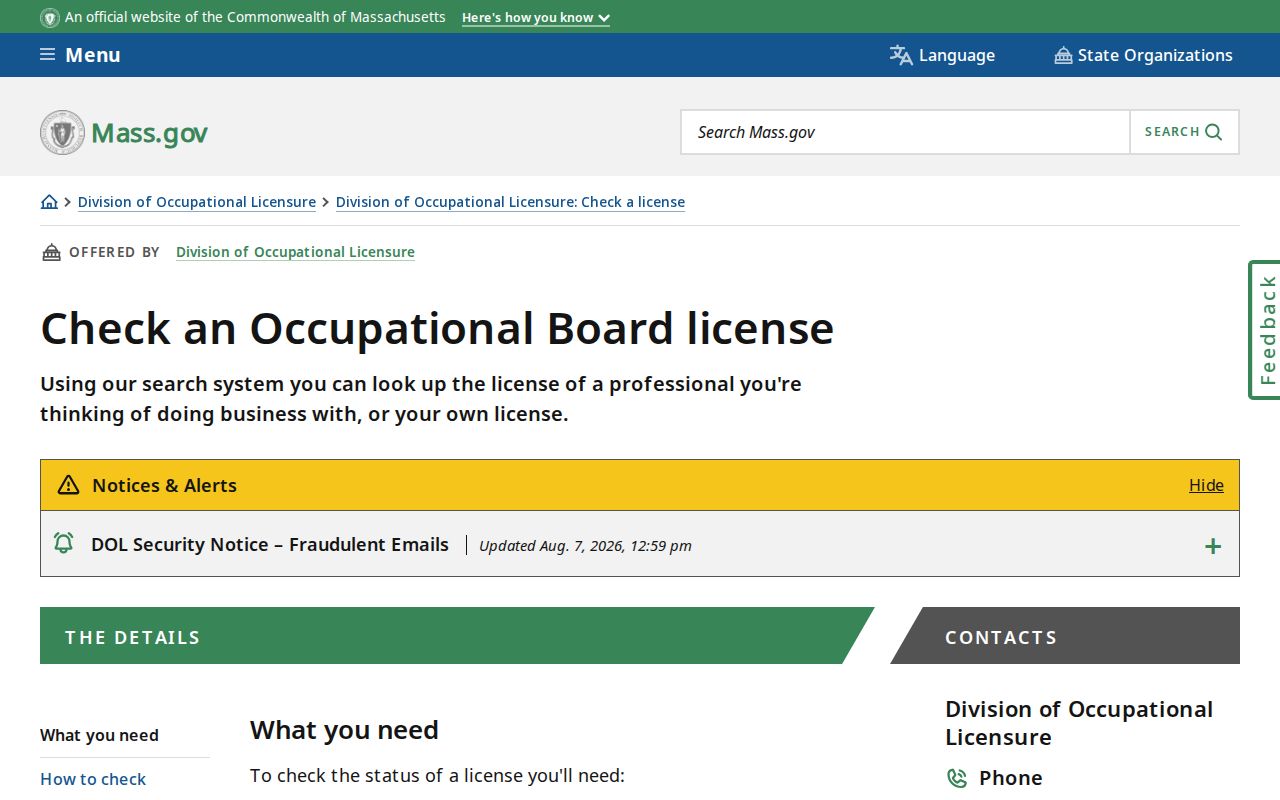
The state screen reflects a Boston record of credential status. It does not prove anyone currently lives at a Boston address.
Massachusetts SORI information follows a separate, tightly defined route. Its online request takes first name, last name, and date of birth. Public online access covers specified Level 2 classifications after July 12, 2013 and Level 3 classifications. Mail and local-police procedures can carry different requirements.
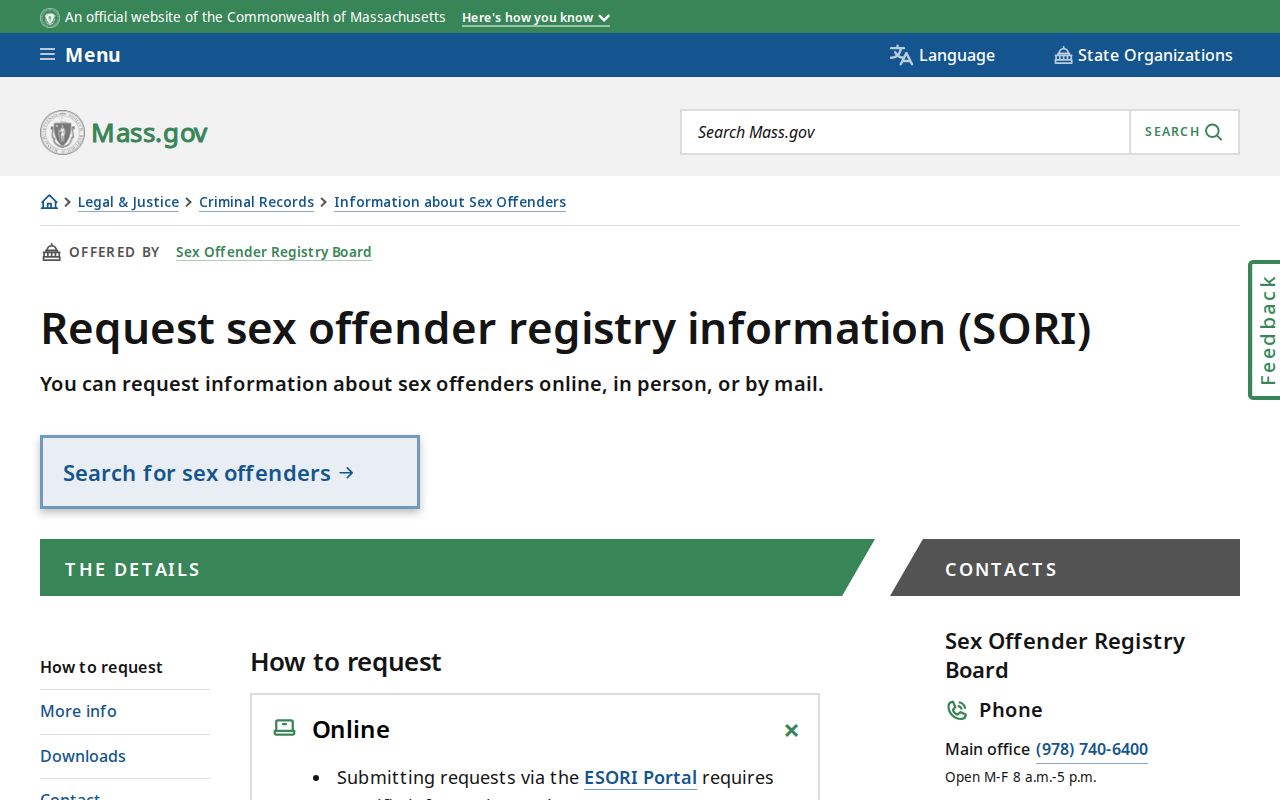
The Boston SORI route is no general people directory. State instructions warn against using registry information to commit a crime, harass, or discriminate.
Boston Annexations Change Names
Boston directory and deed research can stall when a historic entry carries a former town name. South Boston joined in 1804. East Boston followed in 1836, Roxbury in 1868, Dorchester and Mattapan in 1870, and Hyde Park in 1912. Other present-day Boston neighborhoods entered through nineteenth-century annexations. Search the old locality alongside Boston itself. Then compare the street section, deed description, and historical map before concluding two addresses differ.
The Great Fire of November 9–10, 1872 reshaped downtown property and business records too. It destroyed more than 1,000 downtown businesses. City Archives material documents the aftermath and rebuilding. A missing entry after the fire may point to reconstruction or a changed address rather than a departure.
Boston ZIP Codes Need Verification
A Boston ZIP is only a delivery clue. It proves neither a city boundary nor a property owner. The City's own material flags 02467 as overlapping Boston and Chestnut Hill. MassGIS rebuilt its Boston ZIP polygons in March 2024 from USPS address data. The rebuild added 02199 and 02203 and redrew 02108 and 02114. The layer is still an approximation. It is no substitute for an official USPS map. Use a ZIP to narrow a voter search. Then confirm the actual delivery address with USPS. Confirm the jurisdiction with a City parcel record. Boston Property Lookup will not search by ZIP. Even so, GIS data carries a ZIP attribute.
Historic Boston Residents Directory Trails
Boston's directory trail starts in 1789. Publication was irregular before 1820. After 1820 it appeared every year. The Boston Public Library's Local & Family History Collection, housed in the Elliott Room, holds more than 30,000 items spanning the seventeenth through twenty-first centuries. City directories, telephone books, newspapers, maps, and microform sit together there. An obituary database and referrals round it out. Digitized Boston directory runs also live in BPL-linked institutional collections, including Tufts Boston Streets and Internet Archive volumes.
What can one entry prove? It shows a person used an address that year. An occupation or spouse notation may appear too. A directory cannot list every member of a household, so treat each entry as a clue rather than a census. The full collection history, reverse directories, and a household-tracing method are laid out in the Boston city directory guide.
Massachusetts privacy rules still govern some Boston records. The Address Confidentiality Program gives qualifying participants a substitute address and mail forwarding, and protected Boston voter, court, health-license, or vital-record details may be withheld. Use Boston records for lawful personal, historical, civic, and safety purposes, and never follow a name or address trail to stalk, threaten, harass, or harm anyone.